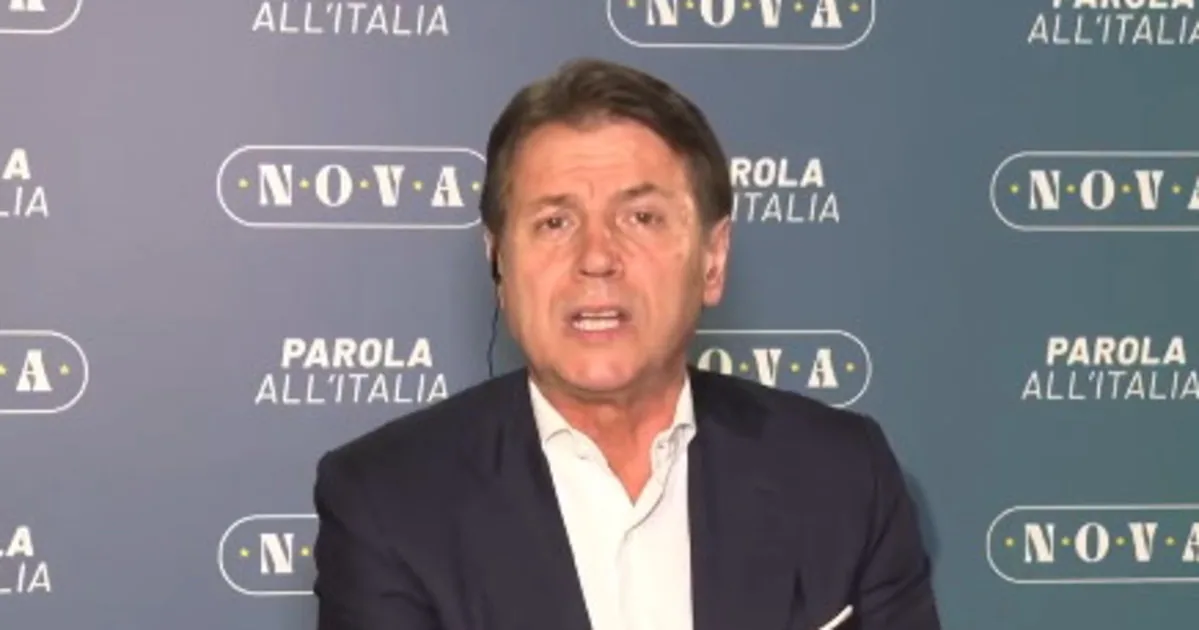




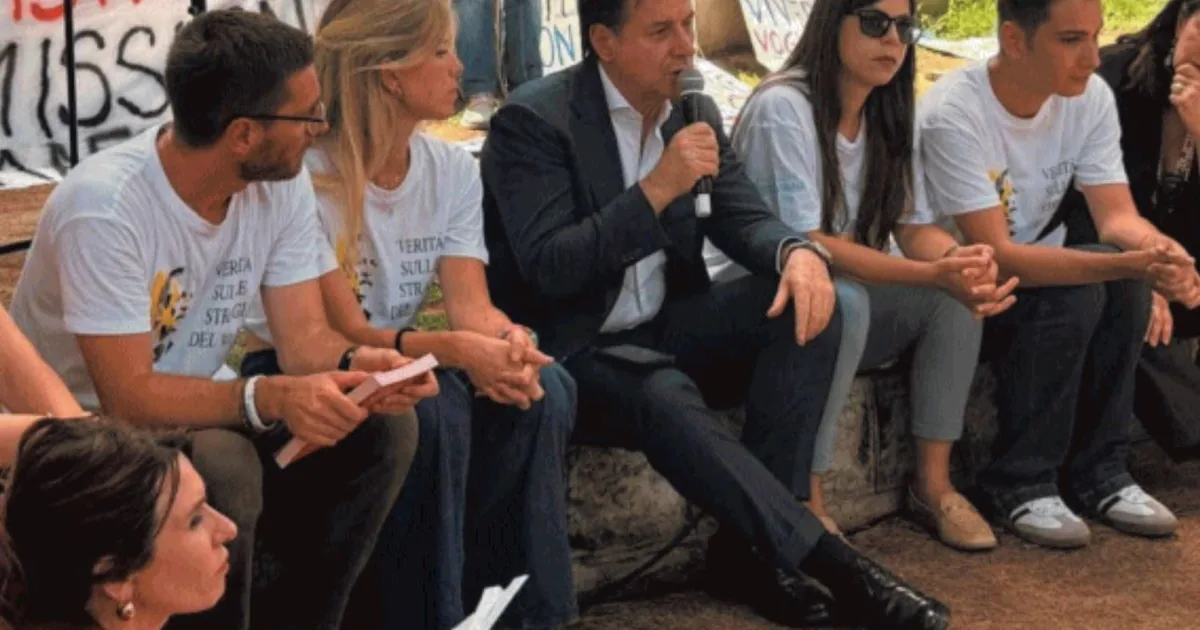
From a place of solemn memory to the stage of an anti-government comedy. The ferocity of the opposition in a perpetual election campaign spares not even the sacrifice of Paolo Borsellino and the memory of the Via D’Amelio Massacre. The anniversary holds a particularly symbolic value for Giorgia Meloni, who has always recalled how her choice to engage politically was precisely in response to that brutality, 34 years ago, when she was just fifteen. For this reason as well, the youth communities of the Social Movement first, then of National Alliance, and now of Brothers of Italy, have been dedicating a commemorative torchlight procession through the streets of Palermo for thirty years. In recent hours, the entire FdI General Staff was present in the Sicilian capital. This, evidently, must not please the opposition too much, lazy when it comes to proposing, but quick as hares when it comes to criticizing. After the President of the Senate, Ignazio La Russa, dared to utter a phrase considered heretical, “Today Borsellino would be an FdI minister,” the leader of the M5s, Giuseppe Conte, who also arrived in Palermo for the anti-mafia network organized by the grillini networks, shouted scandal, speaking of a “shameful misappropriation” and a “theft of moral heritage,” accusing the right of wanting to confiscate a symbol that, according to him, should belong only to the “collective memory.” Only that they, the forgetful ones of politics, are unlikely to value anniversaries that pass without too much concern unless the right takes care of them.
NARRATION
Moreover, this hypersensitivity of the left betrays a historic and indisputable truth, the same that the progressive narrative has tried for decades to hide or sugarcoat: Paolo Borsellino was not an apolitical hero, nor a radical chic parlor icon. He was a right-wing militant, exactly like those who yesterday, once again, marched with torches in hand. To remind us of this, without needing to resort to rhetoric, is the political biography of the man, well reconstructed in the book La Gara by the former MSI and National Alliance member, Guido Lo Porto. In the times when politics was lived among universities, Borsellino did not march in the ’68 protests. On the contrary, he took his first steps in the Giovanni Gentile high school student association and later became Lo Porto’s deputy at Fuan, the university organization of Fiamma. Lo Porto also points out that it was precisely the left that speculated on the memory of the magistrate killed by the mafia (who never renounced his roots, and indeed, on May 19, 1992, was a candidate for the Presidency of the Republic, receiving 47 votes from Fiamma), guilty over the years of theorizing a non-existent “black track” behind the mafia massacres of ’92. If we must talk about exploitation, it lies precisely in the desperate attempt by Conte and his allies to erase the past in order to also enlist Borsellino in the pantheon of political correctness.
ABSURD INDIGNATION
The indignation of the former premier appears as loud as it is lacking in depth, both historical and political, because the right is not “stealing” Borsellino, it is simply remembering who he really was, and because the “official defense” of Conte by the M5s group leader in the Senate Luca Pirondini exposes the intent of the pentastellati: “Being in the square talking about the mafia marks the difference between those who take concrete actions and those who only claim to fight it with words,” he says. But of their concrete actions, apart from the shouting, there is not even a shadow. The center-right’s reply was not long in coming. Giovanni Donzelli, FdI’s organization manager, countered Conte’s accusations with a heavy jab: “Those who released the bosses from prison under the pretext of Covid cannot give us lessons.” Words that bring the debate back to the tracks of reality, far from the media courtroom where Conte would like to confine his opponent. The President of the Anti-Mafia Commission, Chiara Colosimo, also had to remind the 5S leader of the moral duty to distinguish between the investigated and the convicted, highlighting how today’s controversy is, for the opposition, just a way to avoid a broader confrontation. The request by Francesco Filini (FdI), who asked for the resignation of M5S senator Roberto Scarpinato from the Anti-Mafia commission to be heard on the mafia-contracts case, closes the circle of a day in which Borsellino’s memory was, unfortunately, overshadowed by the usual political survival tactics of an opposition that, short of arguments, once again prefers to cry wolf, ignoring that history, the real one, has much broader shoulders than their controversies.
Read more World Cup 2026, Rabiot slams France: «Shameful, unacceptable behavior» | Libero Quotidiano.it