







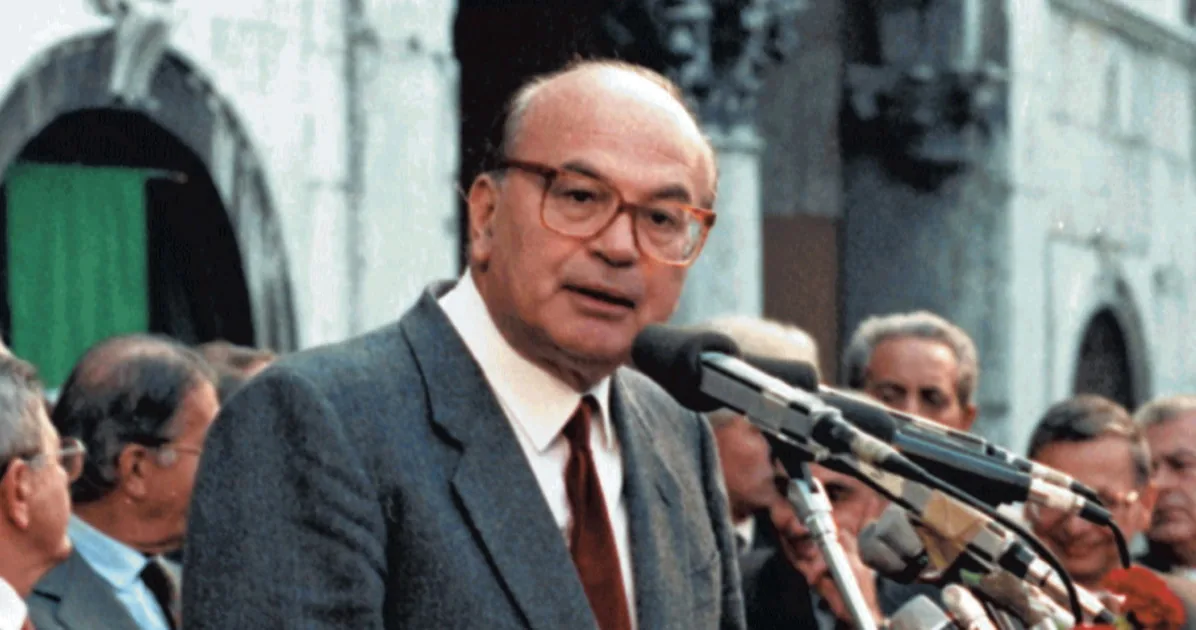
Fifty years ago, on July 16, 1976, the Central Committee of the PSI, meeting at the Midas Hotel in Rome, gave the Socialist Party a new leadership and, together, renewed hope. It not only elected a new secretary but chose a new horizon that marked a profound break with the past, initiating a radical process of identity and cultural redefinition. From that moment, the PSI regained momentum, ambition, and the ability to influence national and international life, gradually returning to be a driving center of ideas and content guided by a modern, European, secular vision, founded on freedom as a value inseparable from social justice and fueled by the conviction that merely managing the existing was not enough.
Read more If the tram unmasks the white man | Libero Quotidiano.it
It was understood that it was necessary to lead change, govern it, interpreting the economic, social, and cultural transformations of a changing society. It was necessary to speak to people, no longer generically to the masses; to put their needs at the center, recognize merits, recover the thought of liberal socialism and apply it to the economic issues of an Italy in which the themes of growth, development, and enterprise increasingly played a decisive role in defining public policies. It was an act of lèse-majesté for the communist left, which only three decades later saw every one of its dogmas collapse under the rubble of the Berlin Wall, having lingered in claiming Lenin’s rich lesson instead of understanding and seizing Craxi’s challenge.
But the history of the “new course” above all shows that when a political force knows how to renew its outlook, update its tools, and speak to people with authenticity and vision, it becomes a protagonist. For this reason, that intuition is still alive and relevant today, and that July 16 fifty years ago represents a warning even for those who do not come from that community. It is a reminder that good politics can change the course of events when it has the courage to embody the change it wants to promote.
It is an approach that transcends time, because in every phase of profound transformation, the ability to read reality, interpret it, and guide it is needed, avoiding being subjected to it. It is adherence to the principle of reality, without abdicating the will to influence and carry forward one’s vision, that makes the Craxian experience not only a political cycle but the concrete demonstration that reformism can be a method of government, not a tactical expedient nor an intermittent label.
Read more Sharpshooters of their own mortgage | Libero Quotidiano.it
Yet, this legacy, so concrete and verifiable in history, has largely been misunderstood by a left that, after some steps forward, has taken many more backward. It has lost the ability to speak to people, to interpret changes, to recognize that work, enterprise, innovation, competitiveness are not “alien” categories, but the grounds on which the possibility of redistributing opportunities and well-being is measured. It has preferred to take refuge in an identity moralism, in a superficial progressivism, in a lexicon that no longer intercepts real life. Thus, that history does not dwell in its depths, because it has not been studied, understood, assumed as heritage. It has been offended, repudiated, and remains for them an unresolved chapter.
But good ideas always make their way. And they have found a home elsewhere, in other areas and fields that, although coming from different traditions, have shown they understand its scope, grasp its relevance, and enhance its drive. Remembering Craxi’s election therefore means paying tribute not only to a leader who would assume the profile of a statesman but to a thought that resists time and history.
by Stefania Craxi
Forza Italia Senate group leader