








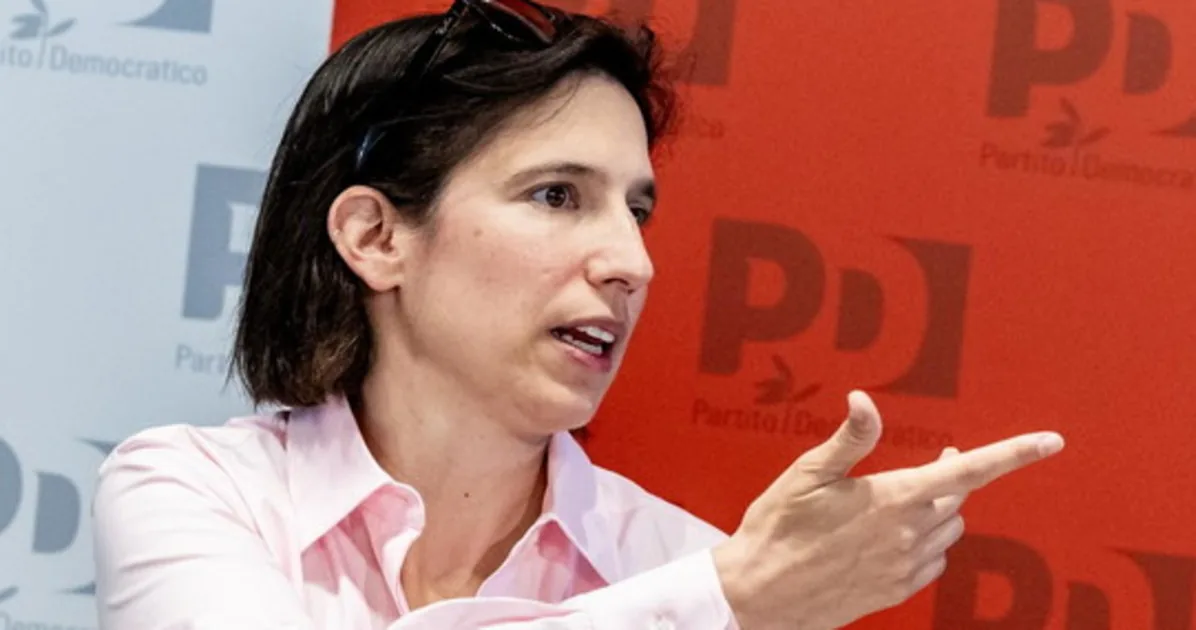
Enough with the “exodus” of young people from Italy. Leaving, said the secretary of the Democratic Party, Elly Schlein, in a press conference at Nazareno, flanked by Marco Sarracino, head of Social Cohesion and the South, by Virginia Libero, secretary of the Young Democrats, and by other young people, representatives of associations that the Democratic Party listened to to define this proposal, must be “a choice”, not an obligation “given by the lack of opportunities, where one is born and grows up”. In addition, Schlein cited the latest Cnel data, according to which as many as “630,000 people”, in the 18 to 35 age group, left “between 2021 and 2024”.
Read more It is known that ideals are priceless but consent is | Libero Quotidiano.it
A “human and also economic loss,” commented the Democratic leader, reeling off other data, this time from Svimez, which calculated the human capital given away abroad at 160 billion. Here, then, is the Democratic Party’s idea aimed at young people (a prize on which Giuseppe Conte has focused and on which the Democratic Party is trying to compete with him): a bill that affirms “the right to stay.” That is, with a series of measures covering various sectors (work, housing, transport), it incentivizes young generations to remain in Italy or to return.
Pigi Battista, the left and June 2nd: “It doesn’t respect institutions, it has lost its sense of the State”
“The leaders of the broad field who desert the June 2nd parade? It’s a sign of a serious involution of the s…
THE MENU
An excellent idea, who can deny it. And the menu is inviting, as well as generous: 200 euros per month for new hires under 35 who have an income not exceeding 45,000 euros per year. Companies that hire them, however, must apply national collective agreements, with a minimum hourly economic treatment of 9 gross euros. Furthermore: non-repayable contributions to support youth start-ups in internal areas, an extraordinary hiring plan always in the municipalities of internal areas (because, Schlein explained, many mountain municipalities, for example, are unable to carry out projects or participate in tenders due to lack of staff). Tax credit for companies that use remote work (with the idea of attracting so-called “digital nomads,” who are presumed to be mostly young people). Creation of a portal – the name is already there: “Scelgo l’Italia” (I Choose Italy) – to facilitate the return of young Italians who have emigrated abroad, putting them in contact with job opportunities in Italy, as well as providing them with information on tax, health, or residency aspects. The last chapter is reserved for housing and transport. Facilitations are foreseen for the purchase and rental of a home, refinancing of the Fund for access to credit for the purchase of a first home for those under 36, greater deductions for young people who sign a rental contract. Last but not least, free public transport for young people (always with a certain ISEE threshold) and research doctorates, supported by scholarships, in universities in the South.
The objectives (listed in Article 2) can only be shared: to protect and enhance human capital, promote youth employment, reduce territorial disparities, and combat depopulation in the South and internal areas.
Elly Schlein hunting for their votes: open feud with “ally” Conte
The new battleground between Giuseppe Conte and Elly Schlein is young people. For heaven’s sake, it’s a…
THE COVERAGE
With what money? And here comes the sore point. Because the measures are not free. The idea of giving 200 euros to new hires costs 700 million a year. Support for start-ups is estimated at 50 million a year, the “Scelgo l’Italia” (I Choose Italy) portal costs 200,000 euros, the refinancing of the “Ricerca Sud” (Research South) Plan 100 million a year, the tax credit for smart working 50 million a year, and the same for hiring staff in municipalities in internal areas. The access fund for the purchase of a first home foresees an expenditure of 100 million, rental deductions are estimated at 500 million, 20 million for the mobility of off-site students. So, with what money?
The coverage is indicated in Article 15: an extraordinary, one-off tax. Or rather: a solidarity contribution from 2027 to 2031 paid by companies with revenues exceeding 50 million euros. That is, “a rate of 8.5%” will be applied to the total income (in addition to taxes already due). A contribution that must be paid “within the sixth month” following the close of the tax period. It must “in no case exceed 25% of the net assets” resulting from the previous balance sheet. The contribution, it is specified, “is not deductible.”