





The new system does not violate the prerogatives of the Head of State regarding the appointment of the Prime Minister: the constraint, in fact, applies to the coalition that takes responsibility for the choice. Even the PD in the primaries saw it as a means to choose not only the secretary but also the prime minister
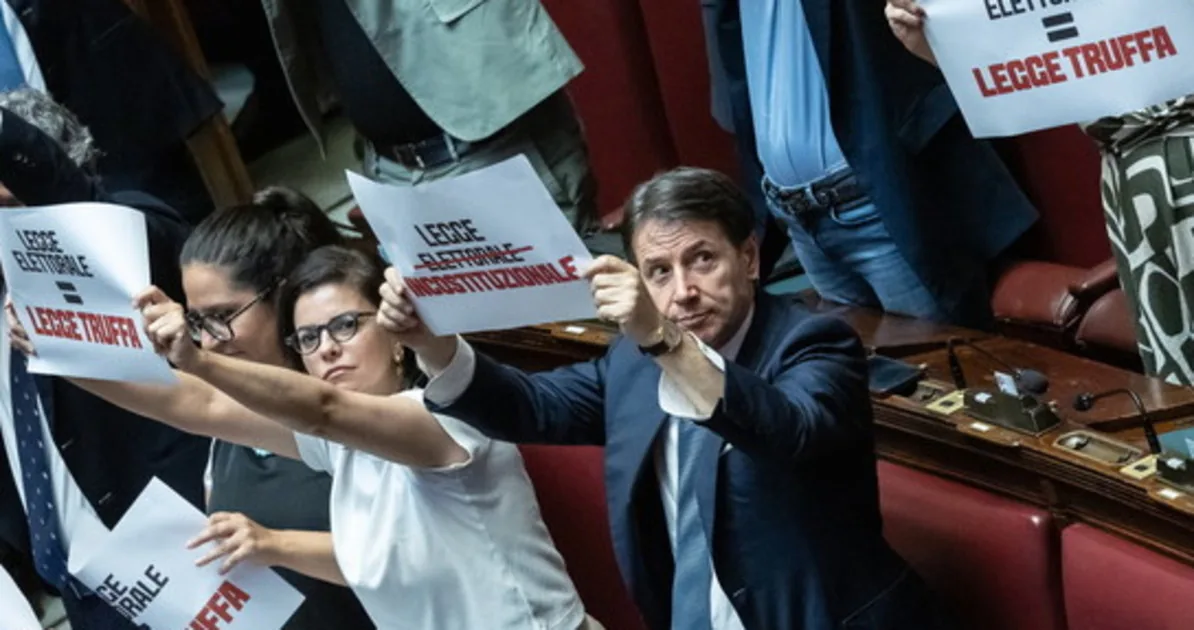
According to many left-wing figures, politicians and constitutionalists, the electoral law under approval would be a source of unspeakable misfortunes and very serious constitutional violations. Among these, in order of severity, would be, at the top, the breach of one of the most important prerogatives of the President of the Republic: that of appointing, following consultations, the President of the Council of Ministers.
Why? Because the law under approval establishes that parties indicate, in the electoral program, the first and last name of the person to be proposed for the office of President of the Council of Ministers.
In the debate these days in the Chamber of Deputies, heartfelt complaints have been heard: this rule would mark the end of the parliamentary form of government, would make the legendary consultations at the Quirinale (a traditional aspect of government crises in the style of the “first Republic”) useless, and would limit the freedom of evaluation and choice of the Head of State.
Now, let us try to clear the field from the usual instrumental use of the Constitution, brandished as a political-polemical weapon. In reality, the debate on the topic to which the rule we are talking about alludes is old, and that same rule is not at all new. It has often been thought, through the electoral law, to help the formation of an institutional context worthy of a mature bipolarism, showing citizens that their vote not only serves to designate parliamentary representation, but also prefigures the hypothesis of a government, through the indication of a recognized leader of the political force or coalition.
Something similar was foreseen, for example, also in the so-called Porcellum. Essentially, rules like these have always been thought to help the formation of a true convention of a mature parliamentary system, in which the leader of the party that wins the elections becomes head of government (as in England, where an authoritarian system does not seem to prevail…).
Let’s be clear: it is not provided that the name of a “prime minister candidate” be written on the ballot paper. If this were established, telling the citizen that his vote is equivalent to a sort of direct election of the President of the Council, then yes, one should shout about the violation of the attributions of the President of the Republic, and the surreptitious creation of a sort of premiership, with ordinary law and not with a constitutional revision. But nothing of the sort happens here.
Let’s pay attention to the words: «The parties indicate, in the electoral program, the first and last name of the person to be proposed for the office of President of the Council of Ministers».
ORDER OF THINGS
We are talking about a proposal to be made to the Head of State, who will obviously be free to take it into account. It is clear, moreover, that if the proposal comes from a political force that has won the elections, the President will hardly be able to deviate from it, but this is in the order of things, provided the election result has been clear. But there is no constraint on presidential powers. Rather, if you think about it carefully, it is a constraint that the coalition of parties places on itself, therefore a self-constraint, and a form of transparency, an assumption of responsibility for its future choices in front of the voters.
And then, one thing is worth emphasizing. It makes even more unlikely the complaints we hear these days. Do we remember the Democratic Party primaries? The PD, born itself from a consistently majoritarian and bipolarist inspiration, saw in the primaries of members and sympathizers the tool to identify not only the party leader, but also, potentially, the possible candidate to propose, in the elections, as President of the Council.
I wouldn’t know what happened to the majoritarian inspiration that then guided the PD (one should ask the representatives of its reformist left, who live uneasily with Schlein’s radicalization): but should we perhaps think that even that whole season was aimed at curbing the evaluative freedom of the President of the Republic?
It would be interesting to have some answers from the diligent prophets of doom, who already anticipate judicial decisions (of the Constitutional Court or, I read these days, also of the European Court of Human Rights) that will tear apart the Stabilicum (or Melonellum, as it may be called).